
The 40th anniversary is the kind of milestone that makes you want to give something that says more than a card can. But when my daughter Meg asked me what to get my parents for their 50th, both of us had the same worry: everything in the stores felt either too generic or too fussy. A vase they would politely admire and then store in the hall closet. A gift basket they would smile at and then regift. What she actually wanted was something that made them stop, and maybe tear up a little, the way my own parents did when we gave them a Calibron Then & Now frame a few years ago.
The idea is simple: one frame, two openings, and two photos that tell the story of the years between them. A wedding photo from the start, a recent photo from now, and a frame that holds both side by side. It sounds easy, and it mostly is. But I have made enough of these gifts over the years, for my parents, for Walt's parents, and for friends marking their own milestones, to know that the difference between a gift that lands and a gift that gets tucked away comes down to a handful of small decisions. This is the process I use every time.
Start with a frame that does the storytelling for you
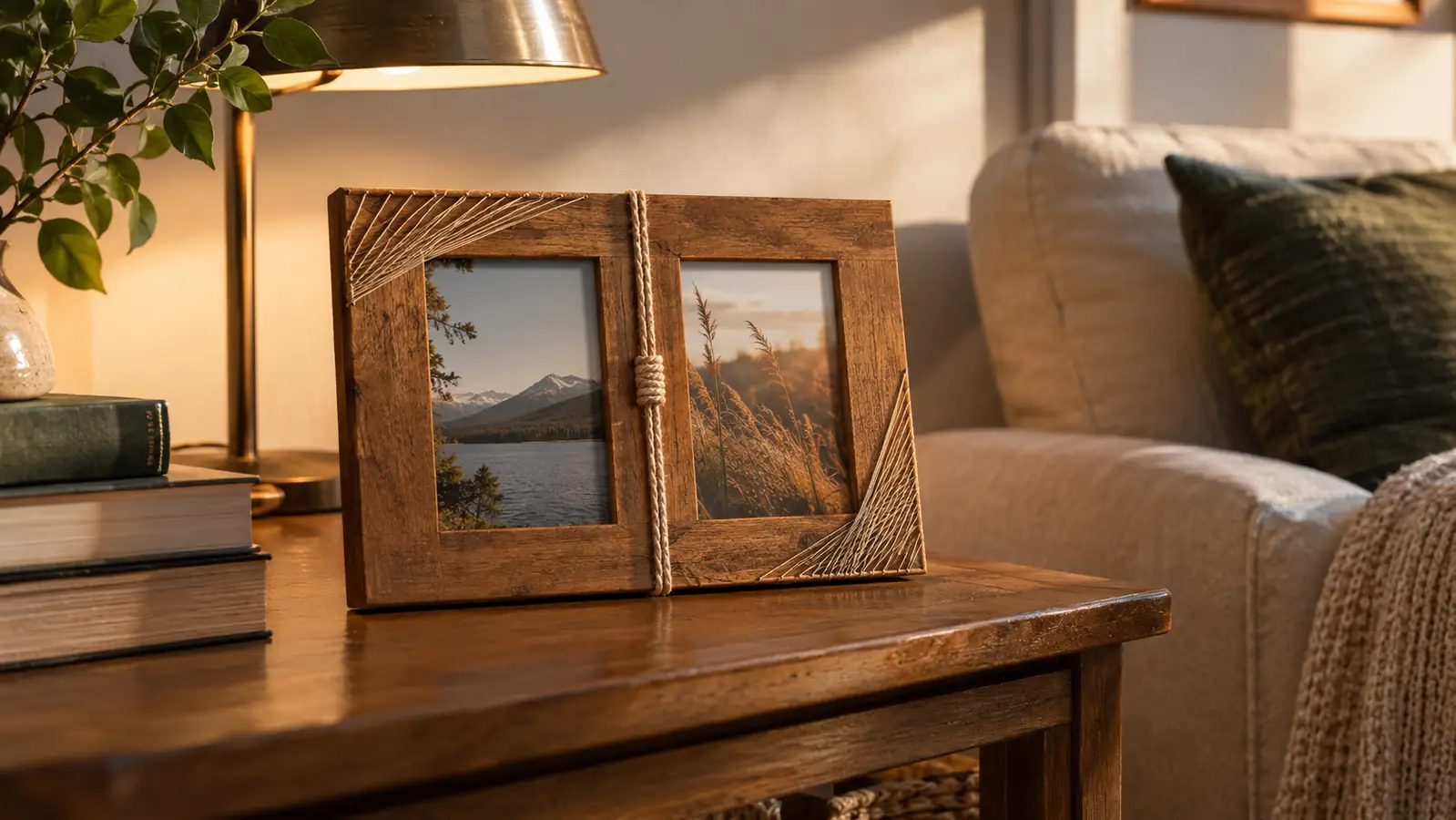
The Calibron Then & Now frame has two openings in one horizontal wooden frame, so your parents' wedding photo and a current photo sit side by side without you having to line anything up. It is the frame I have now given three times, and the one I would buy again today.
Amazon Check Today's Price on Amazon →Step 1: Choose the two photos before you touch the frame
The frame is the easy part. The photos are the whole gift. For a milestone anniversary, the left opening should hold the photo that starts the story: the wedding photo, or if you cannot get a good copy of it, the earliest photo of the two of them together that you can find. It does not need to be a formal studio shot. One of the best versions I ever gave was a slightly faded photo of my parents outside the church, my mother laughing at something my father had just said. For my parents' 50th anniversary, we spent a whole afternoon going through a shoebox of prints in my mother's closet. The wedding album had been packed away since the move to the condo in 2016, and the best photo was not in it. It was a 4x6 print, creased down the middle, of them leaving the reception. Meg had it scanned at the drugstore on Merrimon Avenue, and the crease barely showed once it was cropped to the frame's opening.
The right opening holds the now photo. This is where most people get stuck, because they try to recreate the original photo exactly. You do not need to. What you need is a photo from the last year or two where they look like themselves: the same two people, a little more gray, still clearly the same couple. A good recent photo from a family wedding, a holiday, or even just a candid shot from the backyard works better than a stiff posed portrait.
One practical note: hold both photos in your hands before you commit. Print them at the same size, lay them side by side, and ask yourself whether they look like the same couple. If the contrast is jarring rather than moving, try a different now photo. You are not looking for a dramatic before and after. You are looking for continuity, the sense that the story has been going on the whole time.
Step 2: Print the photos well, not just quickly
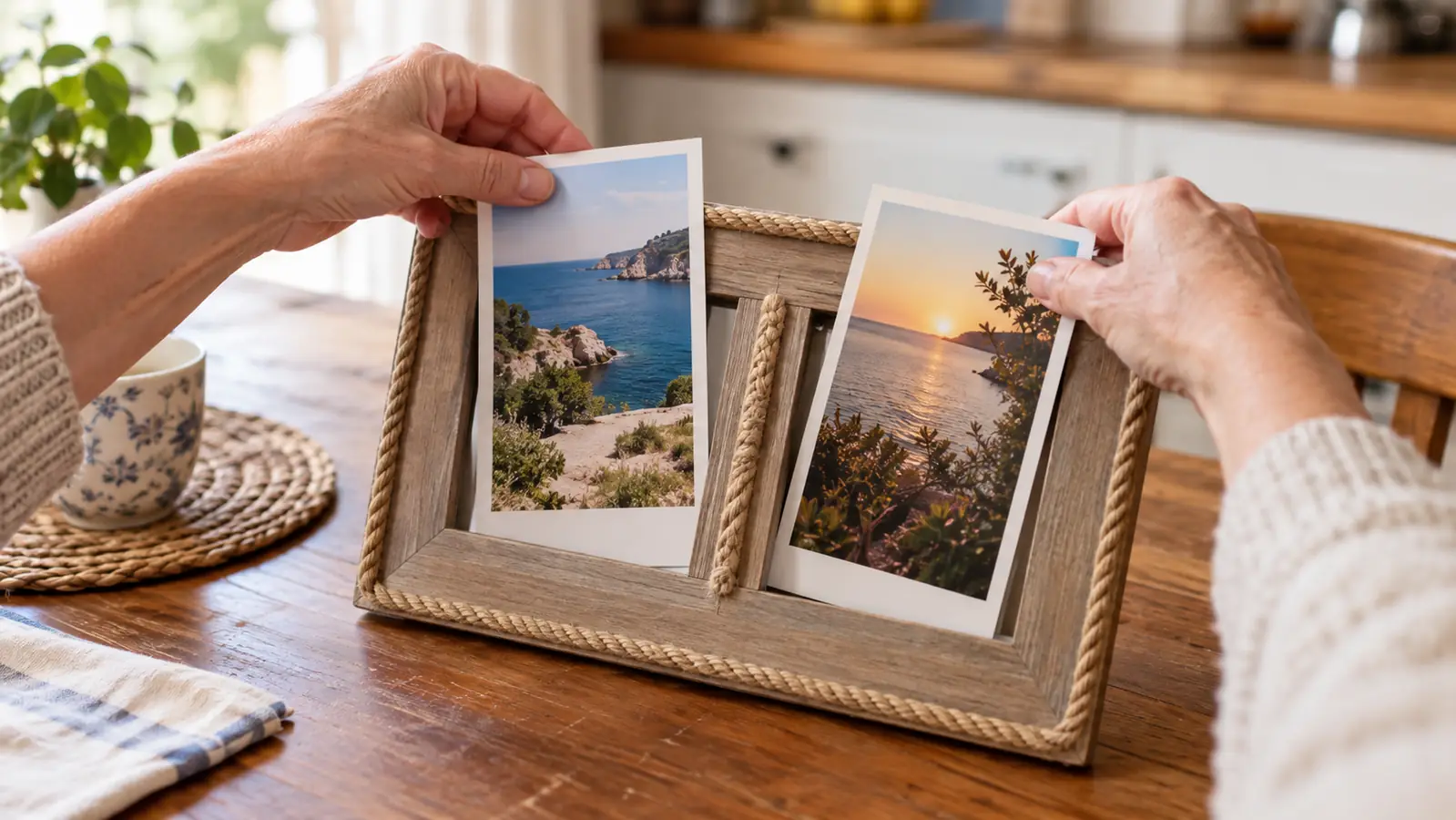
A great photo printed badly will sink the whole gift. Print both photos at a photo lab rather than on a home printer if you can. The difference is noticeable, especially in skin tones and in the shadows of old wedding photos. Most drugstores and big box stores can print same-day, and a surprising number of them will also scan an old photo for you if you bring it in. When I made this frame for Walt's parents, I printed the first version on our home printer and it came out with a greenish cast that made my mother-in-law's wedding dress look dingy. I took the same file to the photo counter and the difference was immediate. The lab version had warmth and depth, and the dress looked white again. It cost a little more and took an extra hour. It was worth every minute.
If you are working from an old wedding photo, ask for a scan at the highest resolution the store offers. You do not need to restore it, and you should not try to colorize it. Just get a clean scan, crop it to the opening size, and let the photo be what it is. Faded is fine. Faded is often part of the charm.
For the now photo, pick one where they are both looking at the camera or at each other, and where the background is not busy. A photo with a cluttered background will fight with the frame's design. And print a backup copy of each photo. You will not need it, but the one time you drop a print face down on a wet counter will be the time you wish you had it.
Step 3: Set up the frame somewhere you can see it while you work
The Calibron Then & Now frame is a horizontal frame, 15.7 inches wide and 8.3 inches tall, with a flat wood profile and a semi-gloss finish. It is designed to be displayed on a tabletop, which is part of why it works so well as a gift. Before you put the photos in, set the frame up on a table or counter where you can look at it straight on. This matters more than it sounds like it should. The first time I assembled one, I did it on the kitchen counter with the frame lying flat, and I had to take it apart twice because the photos looked crooked once I stood it up. Now I prop it against the backsplash at eye level and walk to the other end of the room before I decide anything. It saves a lot of fiddling, and it is the difference between a frame that looks right and one that never quite does.
When you work with the frame flat on a table rather than propped up where you will actually see it, you tend to make decisions about the photos that look wrong once the frame is standing. Set it up at eye level, step back, and live with it for a few minutes. You will notice things you would not have caught otherwise: that the now photo is slightly darker, or that the two photos are not quite the same size, or that the wedding photo needs a little more crop on the left edge.
This is also the moment to think about the frame's details. The Calibron has a string art design with a rope accent, which gives it a handmade feel without actually being handmade. That is a feature, not a problem. It means the frame does the craft work for you, and the gift still feels personal because the photos are yours.
Step 4: Assemble the frame with the story in order
Put the wedding photo in the left opening and the now photo in the right opening. Left to right, then to now, is the order that reads naturally, and it is the order the frame's design expects. If you are left-handed and the opposite order feels more natural to you, test it both ways before you commit. I have seen the reverse order work beautifully, but it has to be a choice, not an accident.
Before you close the frame, wipe the inside of the glass or the front of the photos with a dry microfiber cloth. Fingerprints on the inside of a frame are nearly impossible to remove later, and they are the one flaw that will catch your eye every single time you walk past the gift. Once the frame is closed, give the front one more pass with the cloth.
Then step back and look at it from across the room, not just from close up. This is the distance your parents will see it from most of the time. If the frame reads well from across the room, it is done. You are not making a museum piece. You are making something that holds two people's story, and it should feel warm and a little lived-in, not perfect.
Step 5: Write the card that tells them why you chose these two photos
The frame will do the heavy lifting, but the card is what turns a lovely gift into a milestone gift. Write a short note that names the two photos and why you chose them. It does not need to be long. Three or four sentences is plenty. Something like: this is the photo from the day you started, and this is the photo from the life you built, and we wanted you to see them side by side. For my parents' 50th, I wrote the card in the kitchen the night before, and I rewrote it three times. The first draft was too long. The second draft was too formal. The one that worked was four sentences, and it named the date of the wedding photo and the date of the dance floor photo. Naming the dates was what made my mother cry, and it is the detail I now include every time.
Handwrite the card if you can. It does not need to be neat. The effort is the message. If you are giving the gift as a family, have each person add one line. Meg wrote one line about the photo of my parents dancing at her wedding, and Daniel wrote one line about the fishing trip, and between the two of them they said more than I could have in a paragraph.
Put the card on top of the frame in the gift box, or tuck it into the front of the frame itself if it will fit without covering the photos. The goal is that they read the card first, then look at the frame, then look at each other. That sequence is the gift.
What Else Helps
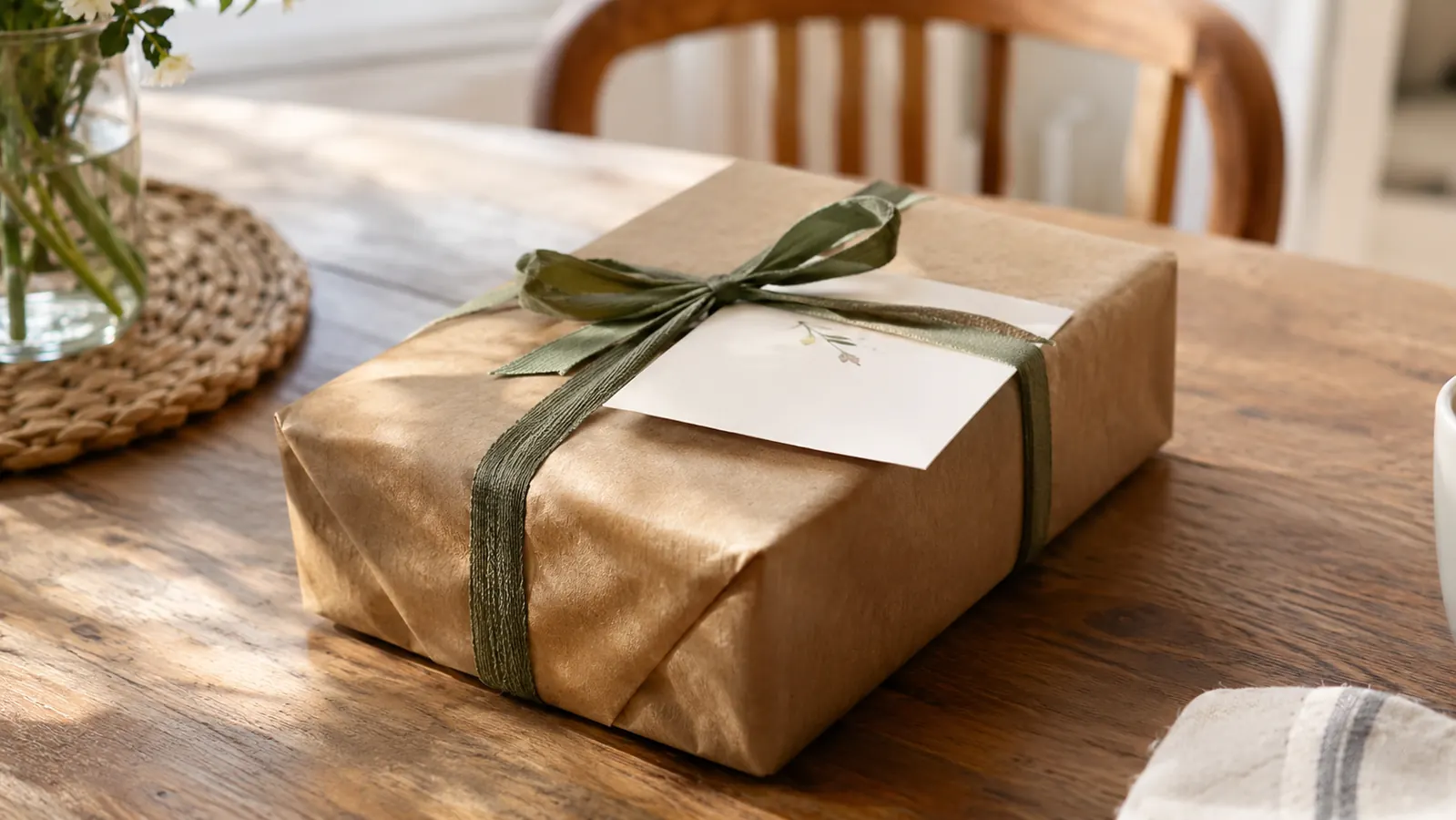
A few small things make the gift feel complete without turning it into a production. Wrap the frame in something simple, brown paper or a clean gift bag, so the frame is the reveal. If you are giving it to your parents at a dinner or a family gathering, give it to them first, before the cake and the toasts, so they have time to look at it without an audience watching their faces. And if you want to add one more layer, include a small printed copy of the now photo in the card envelope, so they can swap it out later if they ever want to change the frame without losing the original.
One thing I have learned from giving this gift: do not apologize for it. Do not say it is just a frame, or that you could not think of anything better. The frame is the container, the photos are the story, and the combination of the two is the gift. If you present it with confidence, they will receive it with confidence.
The frame is the container, the photos are the story, and the combination of the two is the gift.
Give them the frame that holds both halves of the story
The Calibron Then & Now frame is a horizontal wood frame with two openings, a string art design and a rope accent, sized for a tabletop display. It is the frame I have now given three times, and it is the one I would choose again for a milestone anniversary.
Amazon Check Today's Price on Amazon →